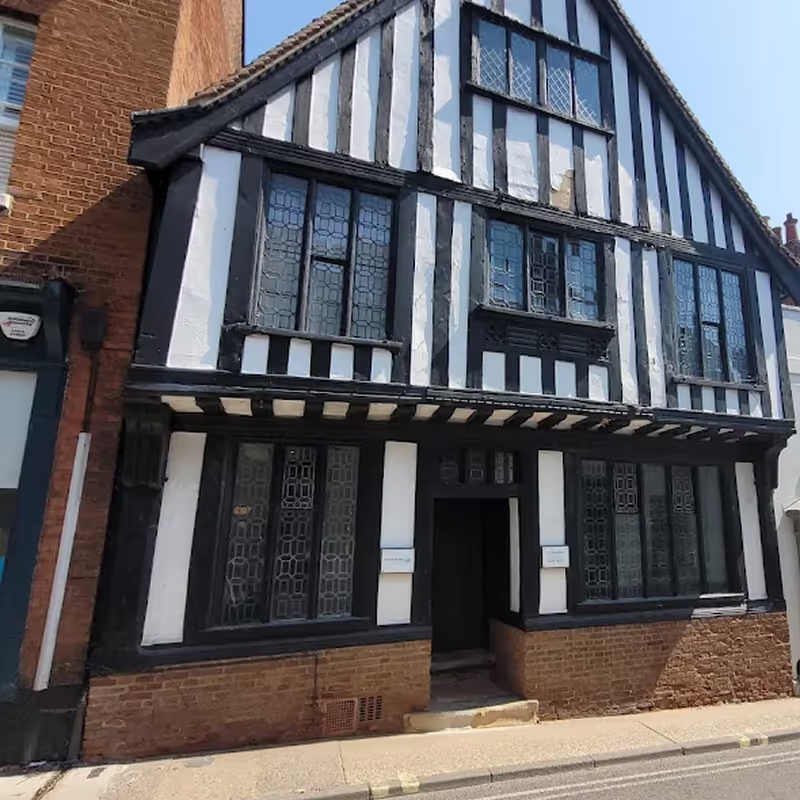
Woodbridge
22 Church Street, Woodbridge,
Suffolk
IP12 1DH
Tel: 01394 388411
Disabled access and limited disabled parking available on request

Saxmundham
Market Place,
Saxmundham,
Suffolk
IP17 1EL
Tel: 01728 602323
Disabled access and limited disabled parking available on request

A Practical Guide for Clients
If you or your child have experienced threatening behaviour, harassment, or intimidation from a partner or ex-partner, a non-molestation order may provide the protection you need.
What is a Non Molestation Order?
Non-molestation orders and occupation orders are protective injunctions available under the Family Law Act 1996. They are designed to safeguard individuals and children from domestic abuse and to regulate who can live in, or return to, the family home. These orders are commonly used in situations involving spouses, civil partners, cohabitants, former partners, and certain family members.
A non-molestation order is an injunction that prohibits a person (“the respondent”) from molesting another person (“the applicant”) or a relevant child.
“Molestation” includes physical violence, threats of violence, harassment, intimidation, pestering, repeated unwanted contact, surveillance, and emotional, psychological, or financial abuse.
The order can also prevent the respondent from contacting the applicant directly or indirectly, attending the applicant’s home, workplace, or children’s school, or encouraging others to harass the applicant.
Legal Effect
Breach of a non-molestation order is a criminal offence punishable by arrest, prosecution, imprisonment, a fine, or both.
What is an Occupation Order?
An occupation order regulates the occupation of the family home. It determines who can live in the property, who must leave, and who can return.
An occupation order can also legally require the respondent to pay the mortgage, rent, or other household bills, even if they have been excluded from the property. Under the Family Law Act 1996, the court can also impose financial conditions regarding outgoings, repairs, and maintenance on either party to ensure the home is maintained.
The order may exclude the respondent entirely, require them to leave within a specified time, or prevent them from coming near the property.
It does not change ownership but regulates occupation only.
Who Can Apply?
Applicants must be “associated persons” under the Family Law Act 1996, including spouses, civil partners, cohabitants, former partners, individuals with parental responsibility, and certain family members.
How to Obtain an Order
The application is made to the Family Court with a supporting witness statement outlining the abuse and need for protection.
In urgent cases, applications can be made without notice to the respondent.
The court will consider safety, housing needs, conduct, and the welfare of any children before making a decision.
Duration
Non-molestation orders typically last 6–12 months but can be extended.
Occupation orders are granted for a defined period depending on circumstances.
Evidence
Clients should retain police reports, medical records, photographs, messages, emails, and witness statements where possible. However, sworn testimony alone may be sufficient.
Advice for Clients
- Seek legal advice promptly.
- Provide detailed and accurate information.
- Prioritise personal safety.
- Understand the seriousness and comply fully with any order.
These orders provide essential protection and housing stability. Early legal advice and proper preparation are key to ensuring safety and legal protection.
Our family law team offers a supportive and compassionate service to guide you through this difficult time. We will explain your options clearly and, where appropriate, make an application to the court on your behalf.
If you feel that you or your child is at risk, we strongly recommend booking a confidential one-hour initial consultation for a fixed fee of £165 + VAT.
For further information call us on 01394 388411 or email michelle.chemli@marshallhatchick.co.uk



Accreditations



%201.svg)

.svg)

